What is Generative
Engine Optimization?
GEO is the practice of structuring your content so AI engines like ChatGPT, Perplexity, Gemini, and Google AI Overviews cite your brand when answering questions your buyers ask. It is the most consequential marketing shift since Google launched.
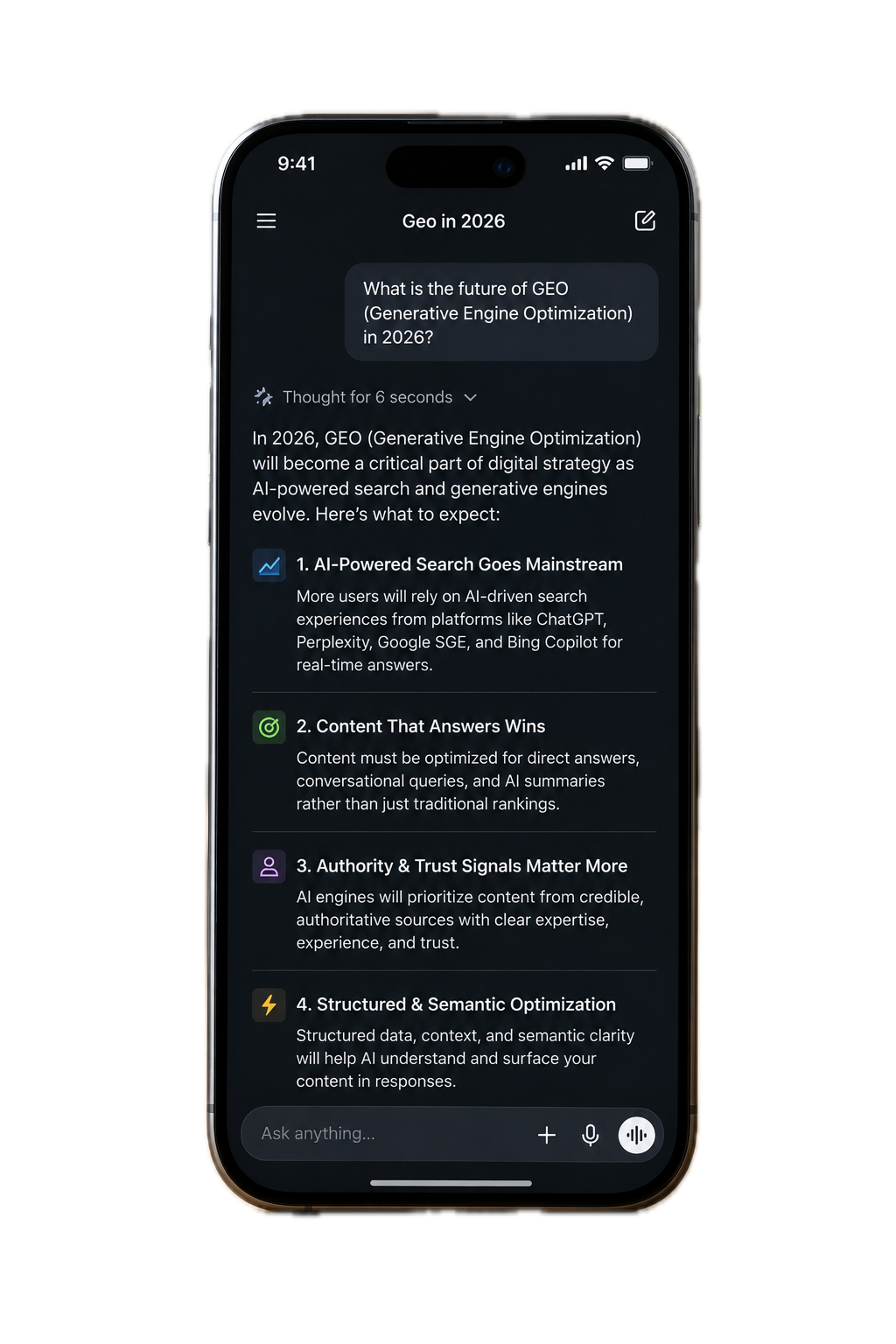
Understanding GEO
Generative Engine Optimization (GEO) is the discipline of making your content citable by AI-powered search and answer engines. When someone asks ChatGPT "what's the best CRM for B2B sales" or asks Perplexity "how do I improve my website's conversion rate," those AI systems generate a synthesized answer and select two to five sources to cite. GEO is the practice of becoming one of those sources.
The shift that makes GEO necessary is fundamental: search behavior has changed. For two decades, Google's dominant paradigm was a list of ten blue links. Users clicked through to websites, read content, and returned to Google to try another link. The ranking algorithm rewarded pages that earned clicks and engagement. That paradigm is ending.
Today, AI Overviews appear at the top of 47% of all Google searches. ChatGPT processes millions of queries daily from users who never visit Google at all. Perplexity AI delivers cited, synthesized answers to over 100 million queries per month. In this environment, being ranked #1 in traditional search results matters less if the AI-generated answer above your ranking satisfies the query completely.
GEO targets the citation layer — the process by which an AI system decides which sources to reference when generating its answer. This process is governed by different signals than traditional search ranking: content extractability (can the AI parse a clear answer from your page?), entity authority (does the AI recognize your brand as credible in this category?), content freshness (was this published or updated recently?), and coverage breadth (does your site answer the full range of questions in your category?).
A business with excellent traditional SEO — top rankings, thousands of backlinks — may still be invisible in AI search if its content is structured in ways AI systems cannot efficiently extract. Conversely, a newer business with well-structured, factually dense, regularly updated content can earn AI citations within weeks of launching a GEO strategy.
GEO is not a replacement for SEO — it is a complement. Brands that run GEO and SEO simultaneously see compounding results: GEO citations increase brand entity authority, which improves SEO rankings; strong SEO domain authority increases the probability of AI citation. The two disciplines reinforce each other, but they require different tactics, different content formats, and different measurement frameworks.
The Building Blocks of GEO
Actually Is
Authority
Velocity
What GEO Citation Looks Like
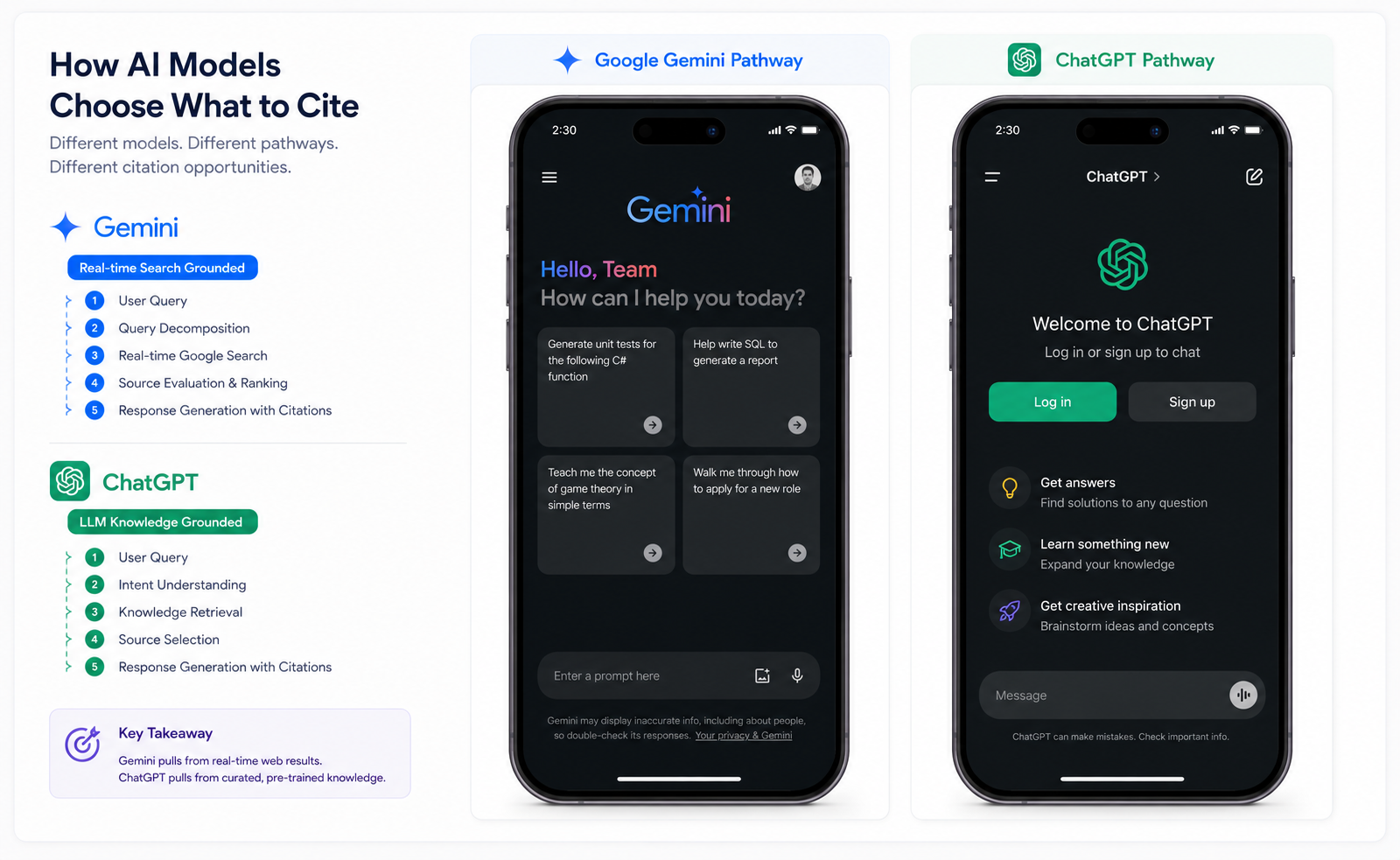
Your Brand Inside the AI Answer
When GEO works, your brand appears not as a search result link but as a cited source inside the AI-generated answer itself. The user reads the answer — and your brand name is the attribution.
On mobile, Google AI Overviews appear above the fold before any traditional results. On desktop, ChatGPT and Perplexity users may never visit a search engine at all. GEO ensures you are present in both environments.
The businesses winning in 2026 appear in AI answers on every platform — laptop, phone, voice assistant, and AI agent. That omnipresence is what GEO builds.
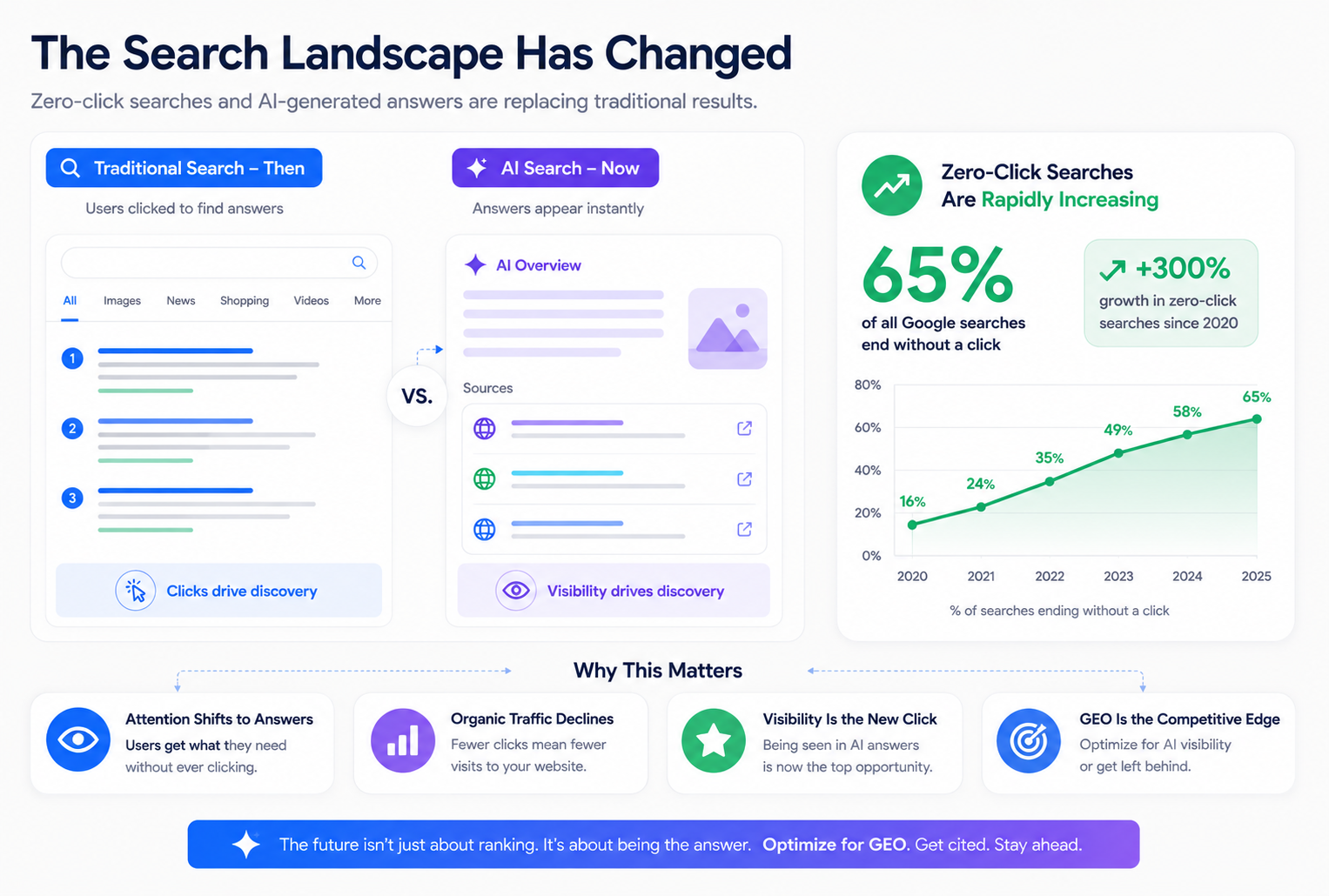
The 61% Problem Nobody Talks About
In 2021, roughly 35% of searches ended without a click. In 2026, that number is 61% — and it is accelerating. The reason is simple: AI answers the question before the user needs to click anything.
Every zero-click search is a missed opportunity for every business that has not built GEO visibility. Your competitor's blog post ranking #3 gets no click if the AI Overview above it already answered the question using your competitor's GEO-optimized content.
The window to build early GEO authority is narrow. AI systems develop citation habits based on which brands appear consistently authoritative in their category. Early movers establish entity authority that becomes self-reinforcing. The brands investing in GEO today will be the default citations for their industry's AI answers in 2027 and beyond.
Why Businesses Are Invisible in AI Search
Everything About GEO Answered
What is Generative Engine Optimization (GEO)? +
How does GEO work? +
How does GEO differ from traditional SEO? +
How long does it take to see results from GEO? +
What type of content works best for GEO? +
How do you measure GEO success? +
Can small businesses benefit from GEO? +
Which AI engines does GEO target? +
Start Appearing in AI Answers
Your buyers are asking AI systems questions right now. The only question is whether your brand is being cited in the answers — or your competitors are.
What our clients say