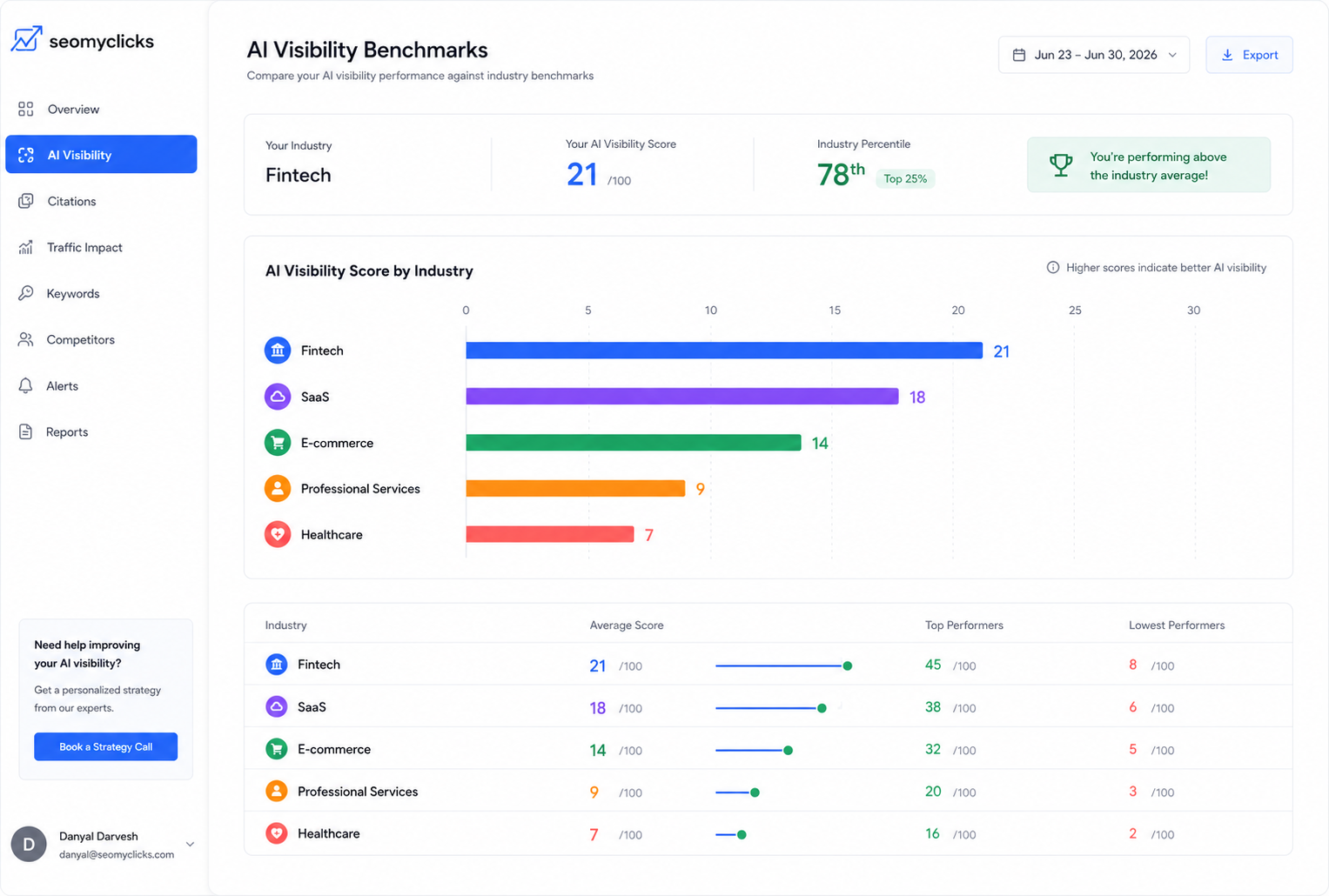
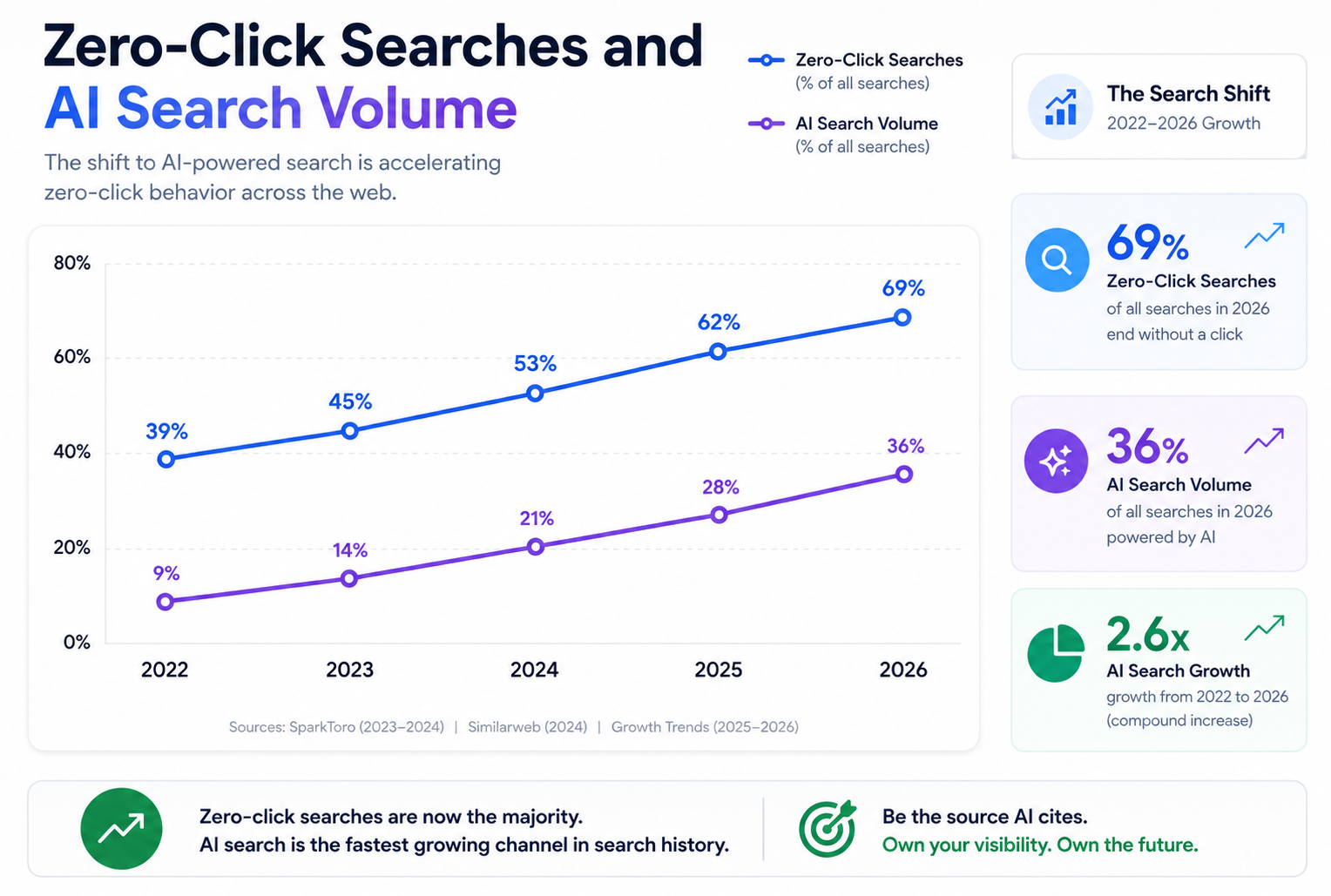
AI search adoption varies by 3x across industries. Generic GEO strategy fails because citation signals differ dramatically by sector. Our quarterly reports give you the benchmark data to build an industry-specific AI visibility strategy that actually works.
The assumption that AI search works the same way across all industries is one of the most expensive mistakes a marketing team can make in 2026. The signals that cause AI systems to cite content in one sector are fundamentally different from the signals that matter in another — and companies optimizing for the wrong signals are invisible in AI answers while their competitors get cited constantly.
The SEO My Clicks Industry Growth Reports are the only quarterly research publication that measures AI citation behavior, GEO/AEO impact, and B2B lead generation benchmarks at the sector level. Each report covers a single industry with 94 data points, giving you a precise picture of where AI search adoption stands in your market, which platforms are growing fastest in your category, and which content signals determine who gets cited.
In SaaS, we found that ChatGPT cites software content 2.8x more than content in other sectors, and that GEO-optimized SaaS companies generate 3.2x more free trial signups from AI-referred traffic than from equivalent traditional organic visits. In HealthTech, AI platforms apply a 89% accuracy threshold before citing health content — meaning that accuracy and sourcing matter even more than optimization. In Fintech, regulatory and compliance terminology is cited 4x more than promotional content.
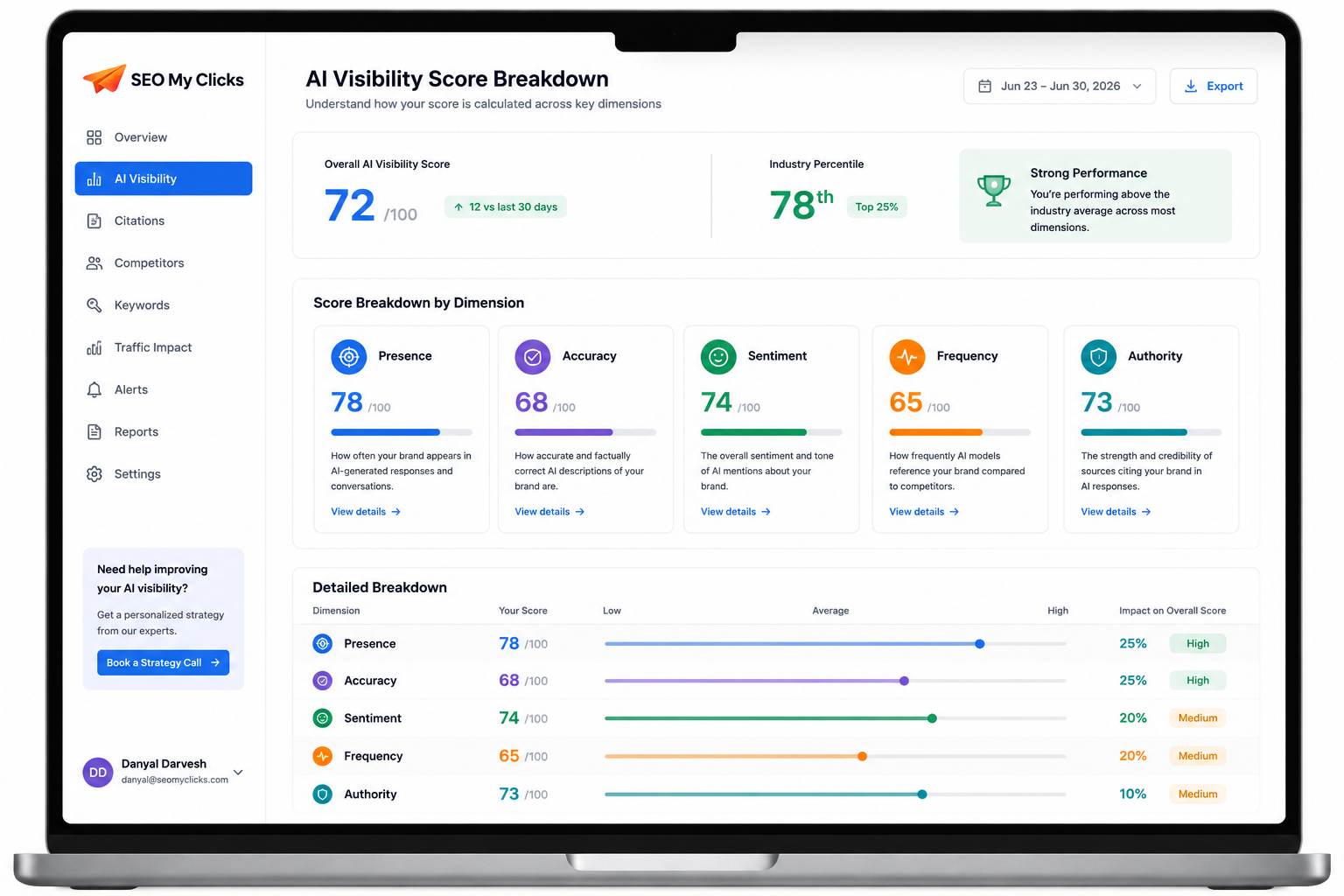
These differences mean your GEO strategy must be built on your industry's specific citation signals. The reports give you the data layer to do exactly that: benchmark your current AI visibility against industry peers, identify the content signals your sector rewards, and build a prioritized roadmap to close the gap to top performers in your market.
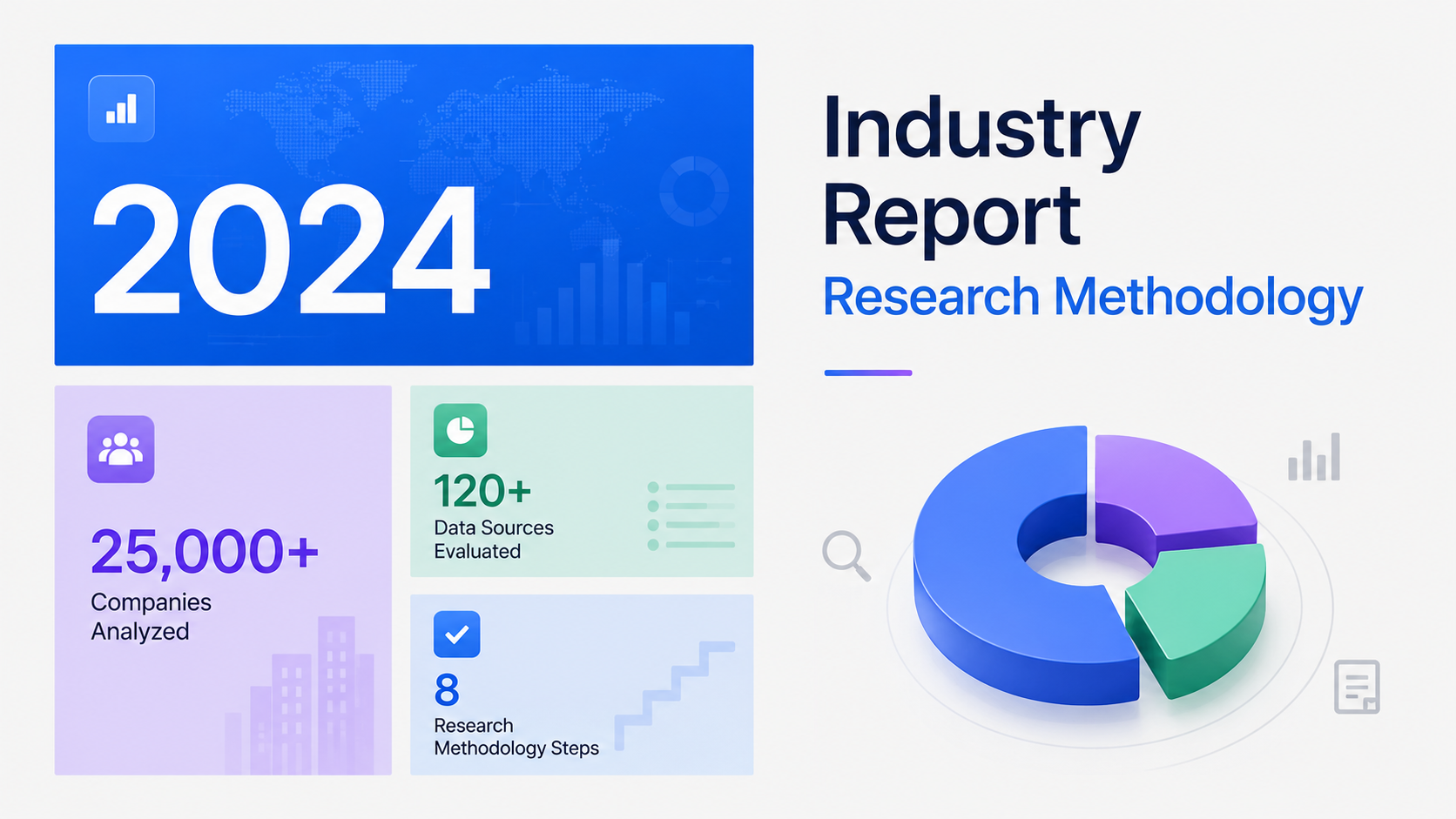
All reports are produced from a methodology combining manual citation audits across AI platforms, an industry participant panel of 200+ companies, and structured analysis of platform behavior. Each edition is updated quarterly to reflect rapid changes in the AI search landscape. The current Q2 2026 editions include data through May 2026.
Each report contains 94 data points, AI platform benchmarks, and sector-specific GEO strategy recommendations — updated every quarter.
SaaS companies see 47% more AI citations than the cross-industry average. GEO-optimized SaaS content delivers 3.2x more trial signups, and ChatGPT cites SaaS content 2.8x more than any other sector.
Healthcare has the highest accuracy requirement for AI citation at 89%. HIPAA-compliant content optimization is the key differentiator, and Perplexity's health citation rate is growing 200% year over year.
Compliance terminology improves AI citation rate by 34% in Fintech. Gemini dominates financial answers, and regulatory content is cited 4x more than promotional content by AI platforms.
Entity authority is the dominant citation signal in Professional Services, accounting for 71% of citation selection. LinkedIn integration is critical for GEO, with an average of 38 days to first AI citation.
Operational content — routes, rates, and transit times — is the most cited content type in logistics. ChatGPT's logistics query volume is growing at 8x rate, and local GEO is 3x more effective than national targeting.
Product comparison content is cited 6x more than product pages in AI answers. Perplexity drives 34% higher AOV traffic than Google for e-commerce, making review aggregation a critical GEO signal.
Legal is the most restrictive AI citation environment. Factual and statutory content is cited 5x more than promotional content, and Google AI Overviews now appear in 67% of legal search queries.
Local content is cited 4x more than national content in real estate AI answers. Perplexity is answering property questions at 180% YoY growth, making agent authority content critical for AI visibility.
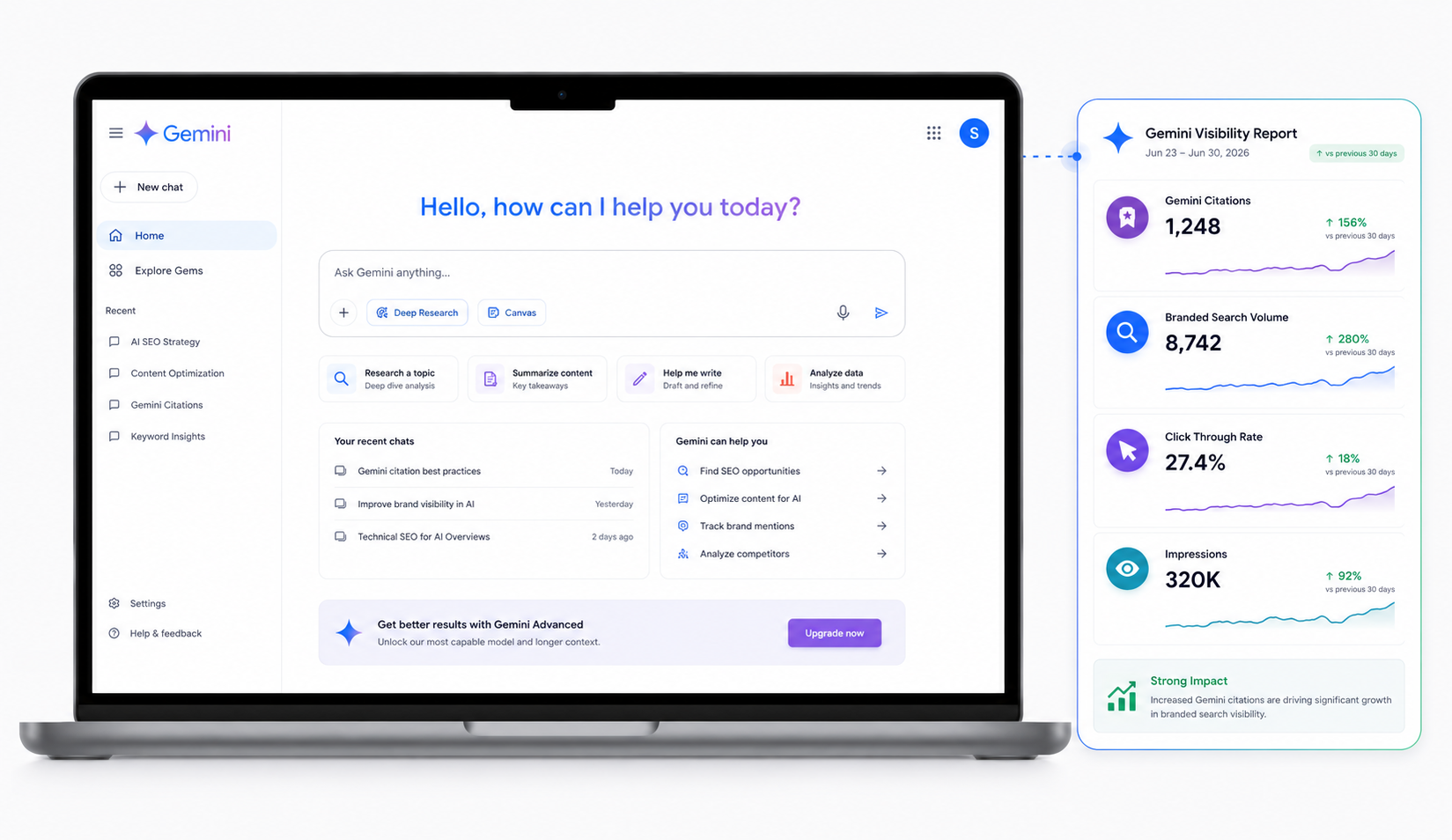
SaaS content is cited 47% more than cross-industry average. ChatGPT leads with 2.8x citation multiplier for software content.
Highest accuracy requirement for AI citation of any industry. Perplexity health queries growing 200% YoY.
Regulatory terminology improves AI citation rate by 34%. Regulatory content cited 4x more than promotional by Gemini.
71% of citation selection in Professional Services is driven by entity authority signals. Average 38 days to first AI citation.
ChatGPT logistics queries growing at 8x rate. Local GEO outperforms national targeting 3:1 for freight and logistics providers.
Product comparison content is cited 6x more than product pages. Perplexity drives 34% higher AOV than Google for e-commerce.
Google AI Overviews appear in 67% of legal searches. Statutory content cited 5x more than promotional in legal AI answers.
Local real estate content cited 4x more than national content in AI answers. Agent authority and local expertise are the dominant citation signals in this rapidly growing AI search category.
Every benchmark in the SEO My Clicks Industry Growth Reports is built from three independent data sources: a manual citation audit panel running 500+ queries per industry per quarter across ChatGPT, Perplexity, Gemini, and Google AI Overviews; a 200+ company participant panel sharing anonymized traffic and citation data; and structured analysis of platform documentation and citation pattern changes.
The measurement period for Q2 2026 reports covers January–May 2026, capturing recent platform behavior including Google AI Overviews expansion and Perplexity's accelerating growth in health and professional services categories.
A law firm optimizing content the same way a SaaS company does will get no AI citations in legal queries — because legal AI citation is driven by statutory authority and factual precision, not the product-comparison and feature-rich content that drives SaaS citations. An e-commerce brand implementing the entity authority strategy that works for Professional Services will see minimal return because AI platforms prioritize product comparison and review aggregation signals for shopping queries. The industry data layer is the missing piece in most GEO implementations.
Applying the same GEO tactics across industries is like using the same keyword strategy for a B2B SaaS company and a local restaurant. The citation signals AI platforms use are fundamentally sector-specific. Generic strategy optimizes for the wrong signals and produces no measurable citation results in your industry's actual query space.
Most AI visibility benchmarks are cross-industry averages that mean nothing for sector-specific performance. A SaaS company benchmarking against the average is comparing itself against legal firms and logistics providers — sectors with very different citation rates. Without industry-specific benchmarks, you have no way to know whether your AI visibility score is strong, average, or lagging in your actual competitive market.
Teams implementing GEO without industry baseline data are making strategic decisions without evidence. They don't know which AI platforms are most active in their sector, which content types get cited, or what a realistic target AI visibility score looks like for their market. This leads to misdirected investment, wrong content priorities, and months of work that produces no measurable improvement in AI citations.
Download the report for your primary industry. If you operate across multiple sectors, start with the one that represents the highest share of your target market or where you have the greatest growth opportunity.
Study the median, top-quartile, and top-decile AI visibility scores for your industry. Understand which AI platforms are most active in your sector and what citation rates the best-performing companies in your market are achieving.
Run a quick AI citation audit using 10 of your category's key queries across ChatGPT, Perplexity, and Google AI Overviews. Count how often you appear versus the benchmark. This is your current AI visibility gap.
Use the sector-specific citation signals section of the report to prioritize your content actions. In SaaS, focus on comparison and feature content. In HealthTech, prioritize accuracy and sourcing. In Fintech, lead with compliance terminology.
Execute the top 10 industry-specific GEO recommendations from the report. Implement the schema types that matter for your sector, build the entity signals your industry's AI systems reward, and restructure content using the citation patterns we've identified.
Re-run your AI citation audit at 30, 60, and 90 days. Measure your AI visibility score against the industry benchmarks in the report. Most companies see measurable citation improvement within 45–90 days of correctly implemented industry-specific GEO.
500+ industry-specific queries run manually across ChatGPT, Perplexity, Gemini, and Google AI Overviews each quarter. Every citation is recorded and analyzed for content type, domain authority, and schema markup.
200+ companies per industry share anonymized traffic, citation, and conversion data. Panel companies span company sizes from 10 to 10,000 employees, providing a representative benchmark for the sector.
Structured analysis of each AI platform's documentation, system prompts, and publicly observable citation behavior. Tracks changes quarter over quarter to identify emerging citation patterns in each sector.
All data is refreshed quarterly to reflect rapid changes in AI platform behavior. Q2 2026 editions cover January–May 2026, including the latest Google AI Overviews expansion and Perplexity growth data.
"The HealthTech report changed our entire content strategy. We didn't know Perplexity was growing 200% in our sector — we'd been focused on Google. Within 60 days of restructuring our content for Perplexity's citation preferences, we started appearing in answers for our most competitive queries."
Download your industry report or speak with the SEO My Clicks team about a custom research engagement tailored to your competitive landscape.
What our clients say