Perplexity handles 100 million queries every month and is growing at 300% year-over-year. Its citations drive some of the highest-intent traffic on the web. Here's the complete breakdown of exactly how it picks its sources.
Perplexity AI is not a search engine in the traditional sense and it's not a chatbot in the ChatGPT sense. It's an "answer engine" — a system designed to synthesize information from the web into direct, cited answers. Understanding how it selects sources requires understanding this middle-ground architecture: Perplexity retrieves real-time web content, evaluates it for relevance and quality, synthesizes a direct answer, and then cites the specific pages that contributed to that answer. Every step of this process is an optimization target.
Perplexity's web retrieval is powered by its proprietary crawler, PerplexityBot, which maintains an index supplemented by partnerships with Bing's index for coverage on less-crawled domains. When a query is entered, Perplexity executes an internal search, retrieves the top candidate pages, fetches their content, and passes the extracted text to its language model for answer synthesis. The source selection that happens in this process is not purely algorithmic — it's a combination of retrieval ranking and language model evaluation, meaning the same page may be selected or passed over depending on how its content compares to competitors for a specific query formulation.
Perplexity typically cites 3-5 sources per answer, and the traffic that flows from these citations has distinct characteristics. Perplexity users — particularly Perplexity Pro subscribers, who pay $20/month for access to more powerful models and better sources — are disproportionately researchers, professionals, analysts, and high-intent buyers. Sources cited in Perplexity Pro answers get 4x higher-intent traffic than comparable organic search clicks because the user arrives having already received a synthesized answer and is clicking through specifically to verify, extend, or act on that information.
The Perplexity citation algorithm has several known preferences that distinguish it from both Google's ranking system and ChatGPT's citation system. Perplexity places unusually strong weight on content clarity — specifically, on pages that make direct, quotable factual statements. It has a visible preference for content with explicit publication dates, clear author attribution, and structured formatting. It strongly disfavors paywalled content (because PerplexityBot cannot access it), thin affiliate content, and pages where the relevant information is buried in long preambles or vague narrative prose.
One of the most important and underappreciated aspects of Perplexity's source selection is its diversity preference. Perplexity rarely cites the same domain twice in a single answer, and it actively selects sources that each contribute a distinct piece of the answer rather than selecting multiple sources that say the same thing. This means a comprehensive content strategy — covering multiple distinct subtopics of a domain authoritatively — is more effective for Perplexity visibility than producing a single very long article on one angle of a topic.
The growth trajectory of Perplexity makes this optimization increasingly valuable. From near zero in 2023 to over 100 million monthly queries in 2026, Perplexity is now a primary research and discovery tool for a large, affluent, professionally active user base. The brands, publishers, and professionals who establish Perplexity citation presence now will benefit from a compounding advantage as the platform continues to grow.
PerplexityBot is Perplexity's proprietary web crawler. It maintains a continuously updated index of the public web, supplemented by Bing's index for broader coverage. Pages must be crawlable (not blocked by robots.txt, not paywalled, not requiring JavaScript rendering to serve content) to enter the citation candidate pool. Verifying that PerplexityBot can access your key pages is the first step in any Perplexity optimization audit.
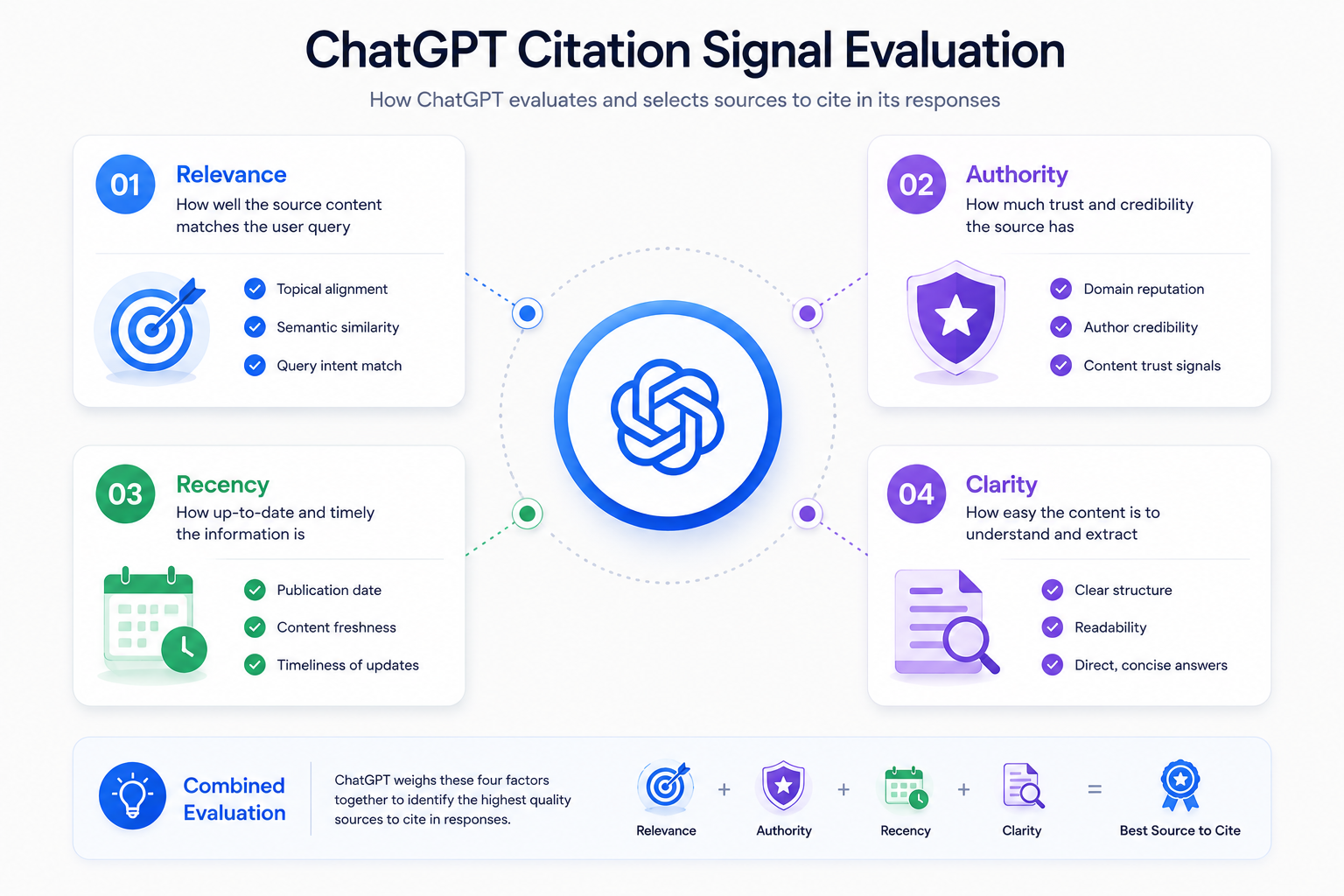
Perplexity evaluates sources on factual accuracy, content clarity, author credibility, domain reputation, and the presence of verifiable data points. Vague or hedged content scores poorly.
Each candidate page is scored against the specific query for answer relevance — how completely and directly does this page address what the user asked? Pages that answer the exact question in the first 200 words score significantly higher than pages that require the reader to hunt for the answer. Perplexity's scoring also evaluates whether the page's answer matches the query's intent (informational, comparative, procedural) and adjusts citations accordingly. A page that's excellent for "how to" queries may score poorly for "what is" queries on the same topic if the structure doesn't match the intent.
Established domains with strong backlink profiles and long publication histories receive a baseline authority boost in Perplexity's scoring. However, this can be overcome by superior content clarity.
Visible publication and modification dates strongly influence Perplexity's freshness scoring. For current-events or rapidly evolving topics, Perplexity has a strong preference for the most recent authoritative content.
Article, FAQPage, HowTo, and NewsArticle schema markup helps Perplexity's system identify content type and structure, improving extraction accuracy and citation probability for structured content.
Pages that earn initial Perplexity citations tend to earn more over time, as Perplexity's system reinforces proven high-quality sources within a topic cluster. Early citation establishment creates compounding visibility.
Perplexity Pro uses more powerful models and often retrieves from a wider, higher-quality source pool than the free tier. Pro answers also cite sources more frequently and from more authoritative domains. Optimizing for Pro-tier citations means producing content that meets higher standards of depth, accuracy, and authority — reaching the most valuable user segment on the platform.
Perplexity's known content preferences break down into four clear dimensions. First, factual directness — Perplexity strongly favors pages that make clear, verifiable factual claims rather than hedged opinion. Second, recency — content with explicit, recent publication dates gets consistent citation preference for any topic that changes over time. Third, domain authority — established domains with strong backlink profiles have a baseline advantage, but this can be overcome by superior content clarity. Fourth, extractability — the ability for Perplexity's system to pull a clean, standalone answer from your page determines whether your content actually ends up cited even if it ranks highly in retrieval.
Perplexity displays citations as numbered source cards prominently alongside every answer. On desktop, the source panel shows your domain, page title, and a preview snippet. On mobile, citations are displayed as scrollable source cards below the answer. Both formats drive high-intent clicks from users who are verifying or deepening the AI-synthesized answer they've already received.
Pages cited in Perplexity typically have clear topic headings, concise factual statements in the first 100 words of each section, visible publication dates, and named author attribution. These are the visual patterns Perplexity's source display emphasizes in the preview snippet.
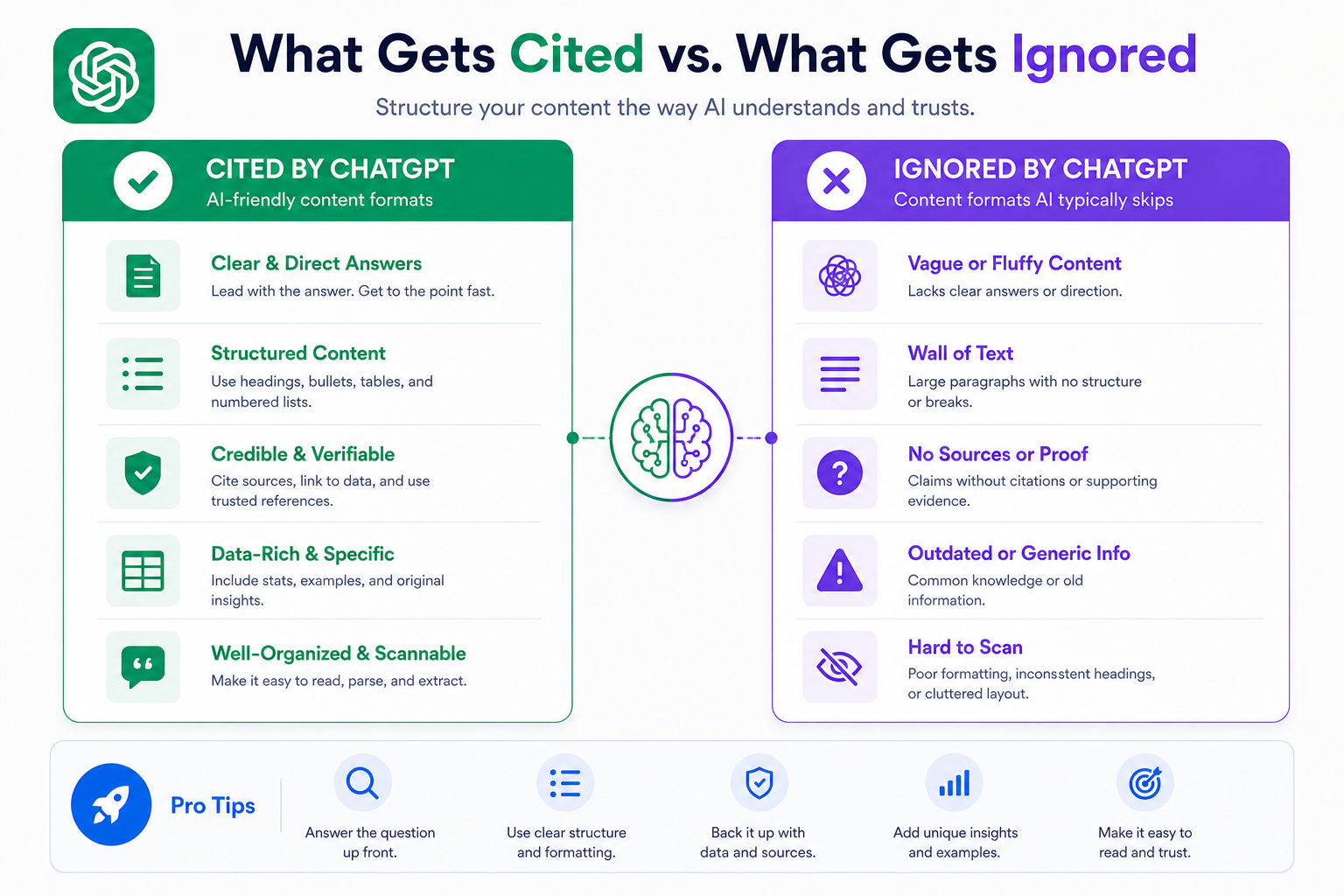
What makes a source "citeable" by Perplexity? Across thousands of observed citations, the pattern is consistent: clear factual statements that can be extracted verbatim, visible publication dates signaling recency, named author with credentials, structured headings that serve as answer labels, and specific data points or named sources that add verifiability. Content that is vague, opinion-heavy, anonymous, or buried behind a paywall is systematically excluded — not by a manual editor, but by the extraction and scoring algorithm that decides what to put in the citation panel.
PerplexityBot cannot crawl content behind paywalls, login gates, or subscription walls. If your best content is inaccessible to the crawler, it simply doesn't exist in Perplexity's universe. Publishers who want Perplexity visibility must ensure core topic pages are publicly accessible, even if premium deep-dives are gated.
Content that buries its key information in long narrative paragraphs without clear headers or answer-first structure gives Perplexity's extraction system nothing clean to cite. Every section of your content needs to begin with its conclusion — the answer, the fact, the definition — not build toward it.
Perplexity's quality filters aggressively exclude thin affiliate content, product round-ups with minimal original analysis, and pages that exist primarily to generate ad or affiliate revenue rather than to inform. Original research, expert analysis, and genuine how-to guidance earn citations. Keyword-stuffed product comparison templates do not.
Rewrite key pages to lead with the direct factual answer. Eliminate long preambles. Use specific data points, named sources, and verifiable claims. Each paragraph should deliver one clear, quotable fact.
Display publish and last-updated dates prominently on every article. Set up a content refresh schedule to keep key pages current. Add datePublished and dateModified in Article schema markup.
Earn backlinks from authoritative industry sources. Get quoted in news publications. Publish original research that earns natural citations. Domain authority is Perplexity's quality floor — you need to clear it to enter the citation pool.
Structure every article with H2/H3 headings that serve as standalone question-or-statement labels. Perplexity uses these headings to identify the topic of each section and match it to query intent segments.
Perplexity weights domain reputation heavily. Get your brand and authors mentioned in Wikipedia, industry publications, news outlets, and authoritative directories to build the reputation signals that lift your baseline citation probability.
Submit your XML sitemap and verify that PerplexityBot is not blocked in your robots.txt. Check your server logs for PerplexityBot visits to confirm your key pages are being crawled. Accelerate indexing of new content through internal linking from established pages.
We never thought about Perplexity until SEO My Clicks showed us it was sending more qualified leads than our paid search campaigns. The optimization was simpler than we expected — mostly restructuring content we already had.
Perplexity AI selects citations through a multi-stage process. First, it issues a search query to its proprietary web index (powered by PerplexityBot and partnerships with Bing). It retrieves the top candidate pages and evaluates each using relevance scoring (how well the page content matches the query intent), source authority (domain reputation and backlink profile), content freshness (publication and modification dates), and extractability (how clearly the relevant information is structured on the page). Perplexity then synthesizes an answer from the top 3-5 sources, citing each one inline in the response. The system strongly favors factual, direct content over opinion-heavy or narrative prose.
Perplexity does not directly use Google rankings. Instead, it maintains its own web index built by PerplexityBot, its proprietary crawler. However, there is significant correlation between Google rankings and Perplexity citations because both systems reward similar quality signals: domain authority, backlink quality, content depth, structured formatting, and E-E-A-T signals. Pages that rank well on Google tend to have the same characteristics that Perplexity's citation algorithm values. That said, Perplexity has been observed citing sources that rank outside Google's top 10 when those sources have superior content clarity and factual precision for specific queries.
New websites can appear in Perplexity citations, though it's more challenging without established domain authority. Perplexity's PerplexityBot crawler indexes new sites as they're submitted or discovered through backlinks. The most effective path for a new site is to publish highly specific, factually precise content on niche topics where the existing web coverage is thin or outdated. Perplexity's preference for clarity and factual accuracy can work in a new site's favor if the content genuinely outclasses older, vaguer competitors. Building early backlinks from authoritative sources and getting mentioned in industry publications also improve a new site's Perplexity visibility.
Perplexity strongly prefers content that makes clear, direct factual statements that can be extracted and cited verbatim or paraphrased with precision. The ideal format includes: a clear, specific answer in the first sentence or two of each section; structured subheadings (H2/H3) that serve as descriptive topic labels; numbered lists or bullet points for multi-part information; visible publication dates and author attribution; and factual claims supported by specific data points or named sources. Content that relies heavily on subjective language, excessive qualifications, or requires context from surrounding paragraphs to be understood performs poorly in Perplexity's citation selection system.
Perplexity does not cite paywalled content that PerplexityBot cannot crawl. If your content is behind a paywall or requires user authentication to access, PerplexityBot cannot retrieve and index it, meaning it cannot appear in Perplexity's citation pool. Perplexity has faced criticism and some legal challenges regarding its aggressive crawling of content that publishers intended to gate, but for citation purposes, the practical rule is: if a crawler can't read it, Perplexity can't cite it. Publishers who want Perplexity visibility should ensure their core topical content is publicly accessible, even if premium deep-dives are gated.
Increasing Perplexity citation frequency requires a combination of technical and content strategies. On the technical side: ensure PerplexityBot is not blocked in your robots.txt, submit your sitemap for faster indexing, maintain fast page load speeds (under 2 seconds), and implement structured data markup for your content type. On the content side: publish clear factual content with visible publication dates, build domain authority through quality backlinks, write answer-first paragraphs that give Perplexity a clear extraction target, and cover topics comprehensively so you're relevant across a range of related queries. Monitoring your Perplexity appearances regularly and identifying which content formats earn the most citations allows you to replicate what works.
Perplexity is most frequently used for factual research queries — technology explanations, product comparisons, scientific topics, financial data, health information, and how-to guides. It excels at synthesizing answers to specific factual questions where the user wants a direct answer rather than a list of links to browse. Content that answers specific 'what is,' 'how does,' 'why does,' and 'how to' questions tends to earn the highest citation rates. Perplexity Pro users — who represent a disproportionately high-value audience of researchers, professionals, and power users — tend to query more complex technical and professional topics, making B2B and technical content particularly valuable.
Tracking Perplexity citations involves several methods. First, check your referral traffic in Google Analytics 4 for sessions originating from perplexity.ai. Second, use brand monitoring tools like Google Alerts or Mention to catch mentions of your domain in shared Perplexity conversations. Third, manually test queries relevant to your content in Perplexity and observe whether your domain appears in the citation sources. Fourth, AI citation tracking tools like Profound, Authoritas, and Semrush's AI tracking features now include Perplexity monitoring. Finally, watch for changes in branded search volume — Perplexity citations drive measurable increases in direct brand searches, which shows up in Google Search Console as an increase in branded query impressions.
SEO My Clicks builds citation strategies that get your content appearing in Perplexity, ChatGPT, Google AI Overviews, and Gemini answers. Start with a full AI citation audit of your existing content.
What our clients say