For two decades, the entire logic of search engine optimization rested on a simple assumption: people search, they see your listing, they click, they visit your website. Traffic was the metric. Rankings were the proxy for traffic. Everything optimized toward the click.
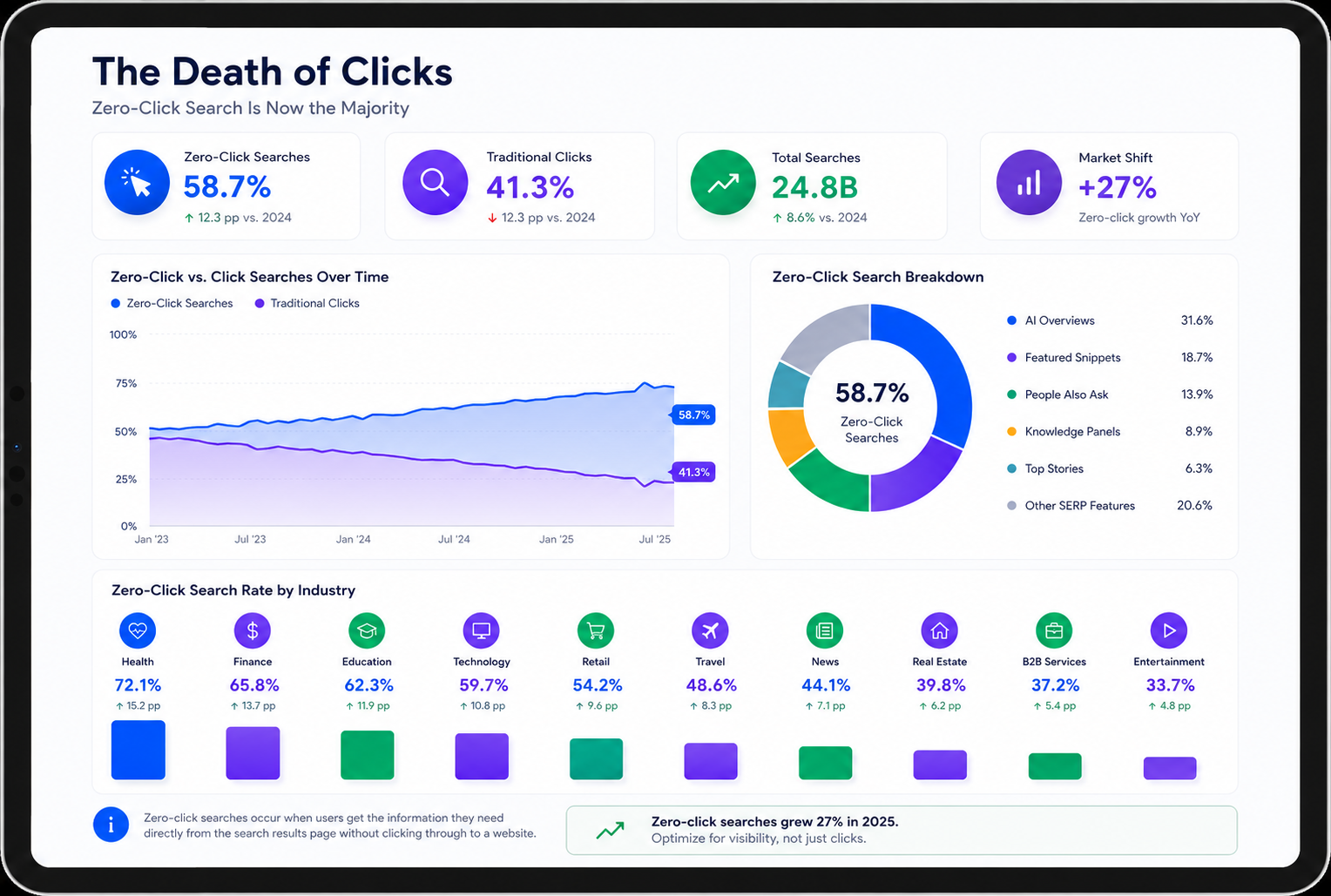
That assumption is now broken. According to landmark research by SparkToro in 2024, 61% of all Google searches in the United States now end without a single click to any website. The user types their query, reads the search results page, gets their answer, and closes the tab — without your website ever registering a session.
This is not a minor trend. This is a structural transformation of how search works.
The Mechanism Behind Zero-Click Searches
When a user asks Google "what is a zero-click search," Google's AI Overview synthesizes a four-paragraph answer drawing from multiple sources. The user reads the answer, gets what they need, and leaves. The sources cited in tiny footnotes at the bottom of the AI Overview receive essentially no traffic — even though their content powered the answer. This is the core paradox of the zero-click era: your content is more important than ever, but your traffic doesn't reflect it.
AI Overviews now appear in approximately 47% of all Google searches. Featured snippets (the "position zero" boxes that pull a direct answer from a webpage) appear in roughly 12% of queries. Knowledge panels, which provide instant information about businesses, people, and concepts, show up in 43% of branded searches. People Also Ask boxes expand inline to answer follow-up questions without requiring a click. Together, these features answer the user's question before they ever reach a blue link.
The CTR Collapse in Numbers
The click-through rate data tells the story clearly. In 2022, the organic position 1 result on Google captured approximately 28% of all clicks for a given query — a strong signal that ranking first drove substantial traffic. By 2026, that same position 1 result captures just 13% of clicks. The difference isn't going to positions 2, 3, and 4. The difference is going to zero. Users are answering their questions without clicking anywhere.
This means that even if you rank first for every keyword on your target list, you can expect to receive less than half the traffic those rankings would have generated four years ago.
Which Industries Are Feeling It Most
The impact is not uniform across industries. Informational content — health information, legal definitions, financial explanations, recipes, how-to guides — is hit hardest because these are precisely the questions AI can answer well. A user searching "what is the capital gains tax rate" gets the exact number from an AI Overview. They don't need to visit an accounting firm's blog.
Transactional queries — "buy running shoes," "Miami SEO agency," "book dentist appointment" — are more click-resistant because the user needs to complete an action. AI can tell you what to look for in running shoes, but it cannot purchase them for you. Yet. Even here, however, AI is beginning to intercept the research phase that once drove top-of-funnel clicks.
The New Visibility Equation
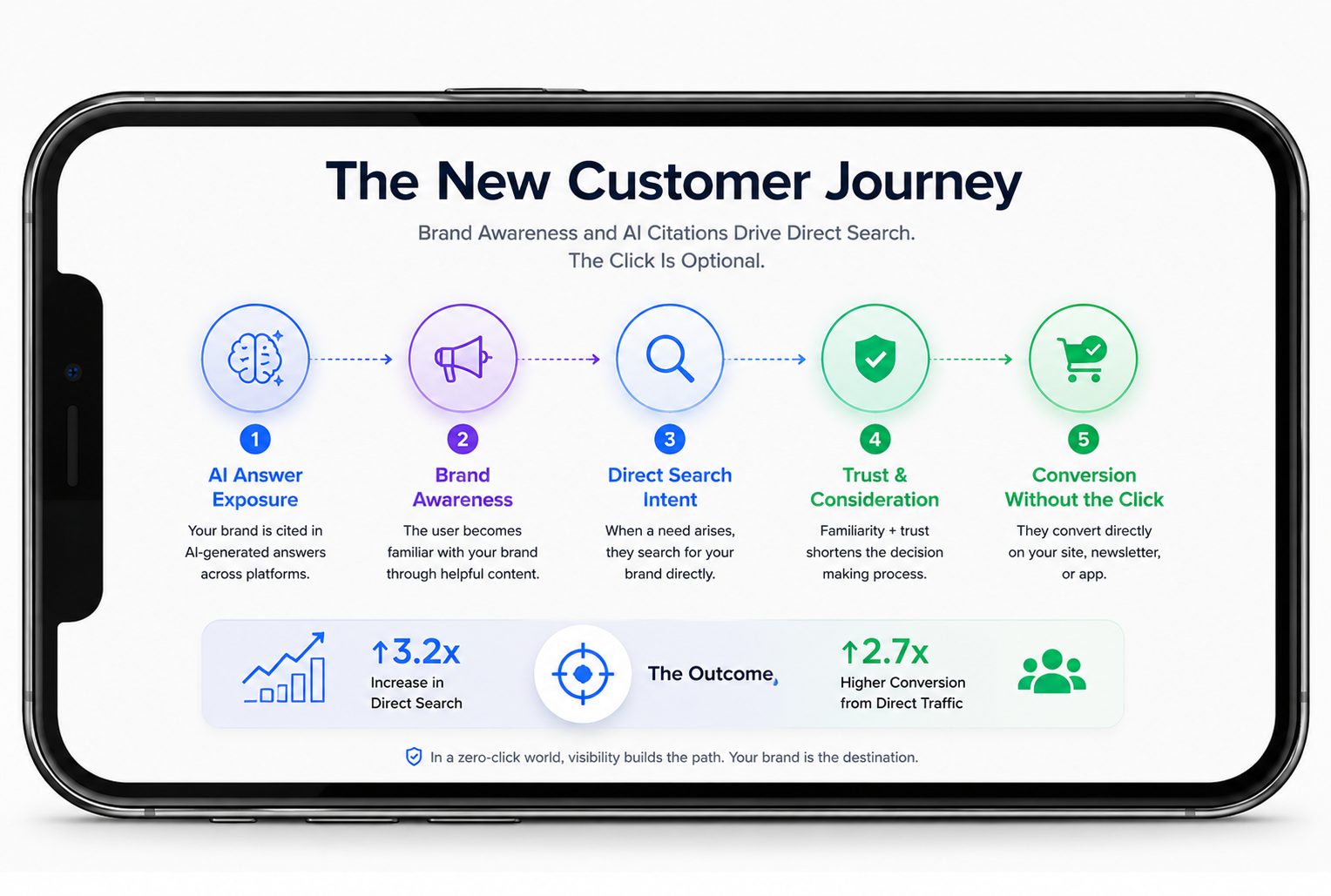
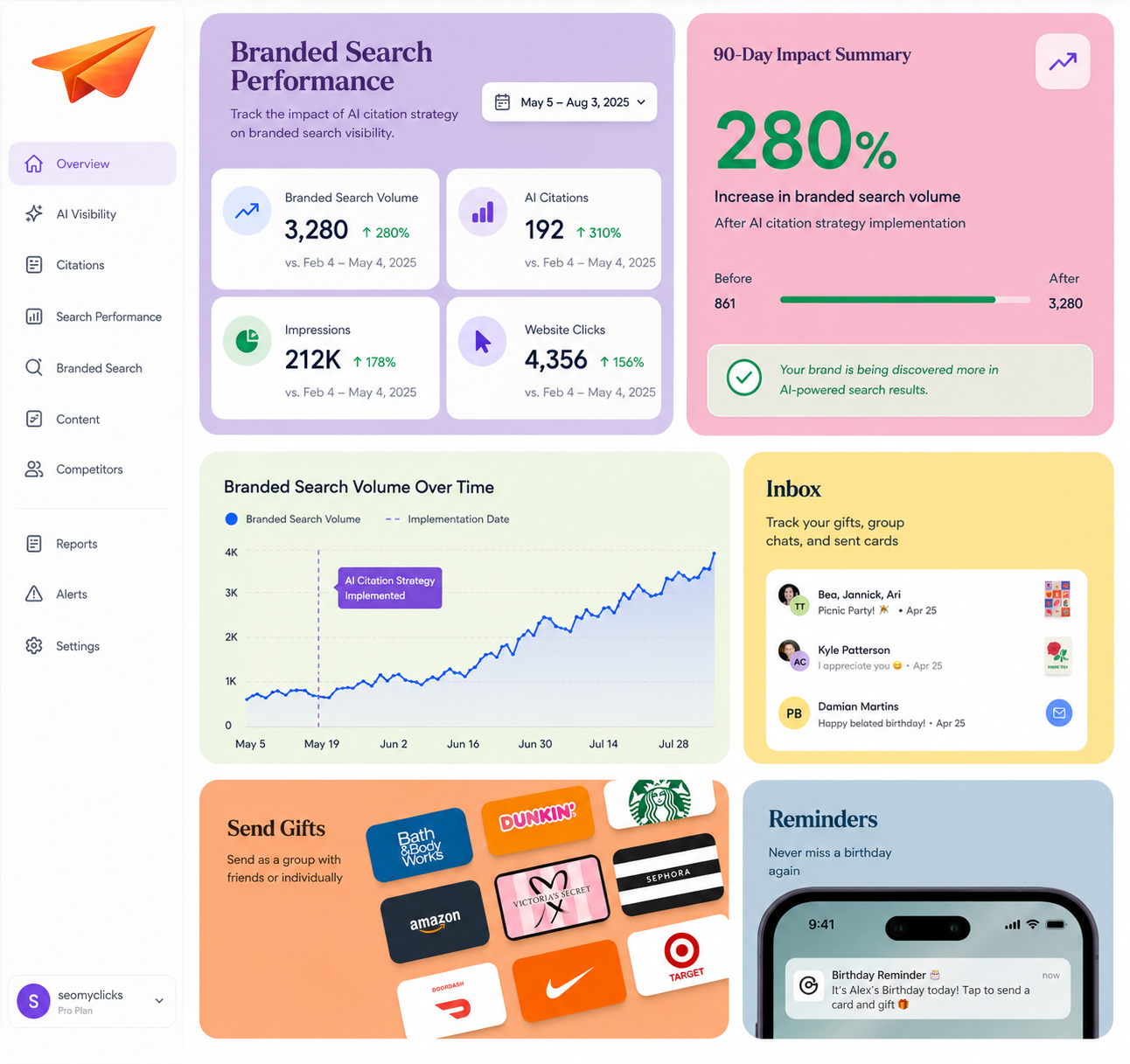
What replaces the click? Brand awareness. Entity authority. AI citations. When users repeatedly see your brand name cited in AI-generated answers — even without clicking — they build familiarity and trust. That familiarity manifests as direct searches ("SEO My Clicks review"), branded navigational queries, and word-of-mouth referrals. The click death doesn't mean your business dies. It means the path from search to customer has fundamentally changed, and businesses that understand this new path will outcompete those still optimizing for a metric that no longer captures the full value of search visibility.