What is the difference between GEO and AEO?
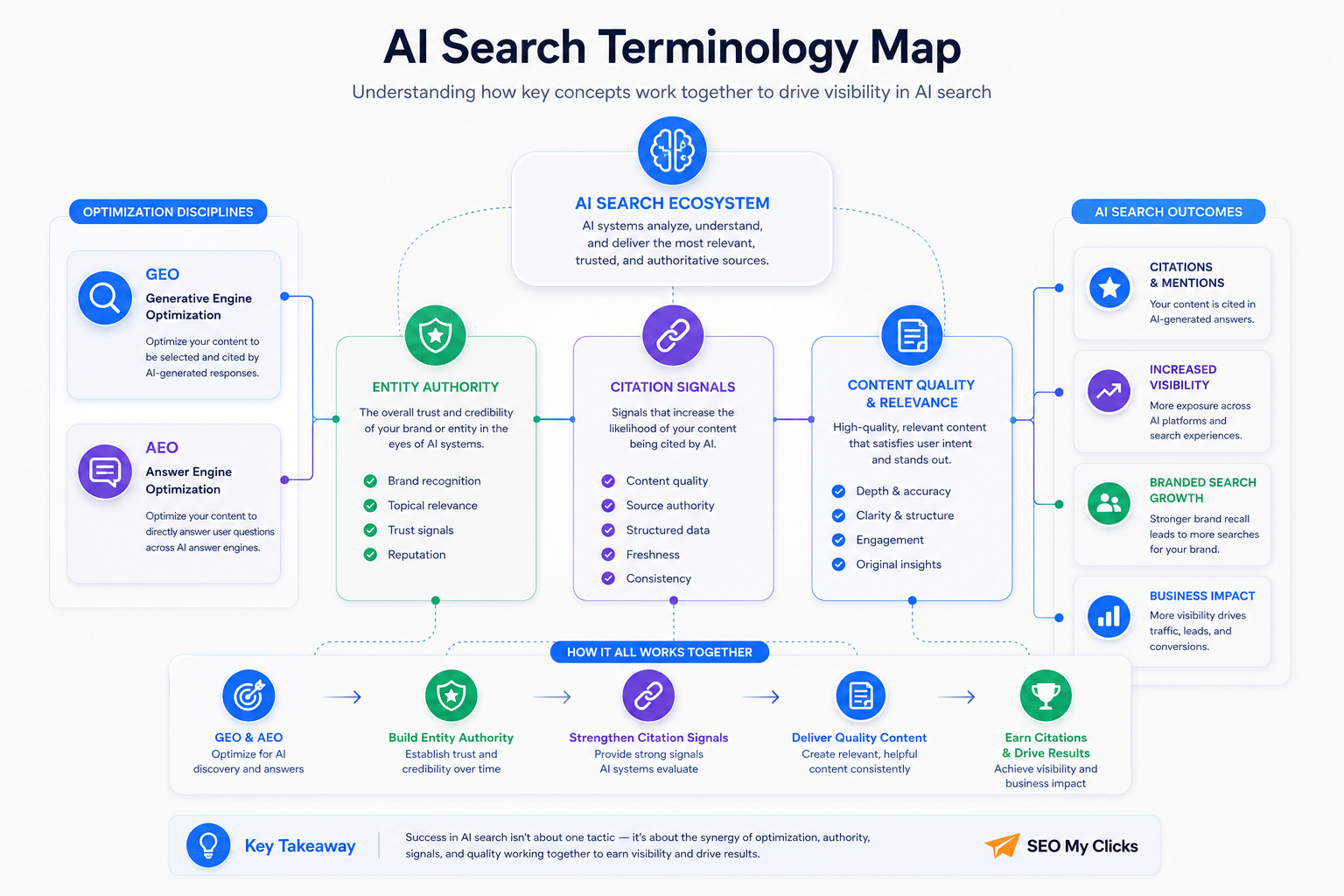
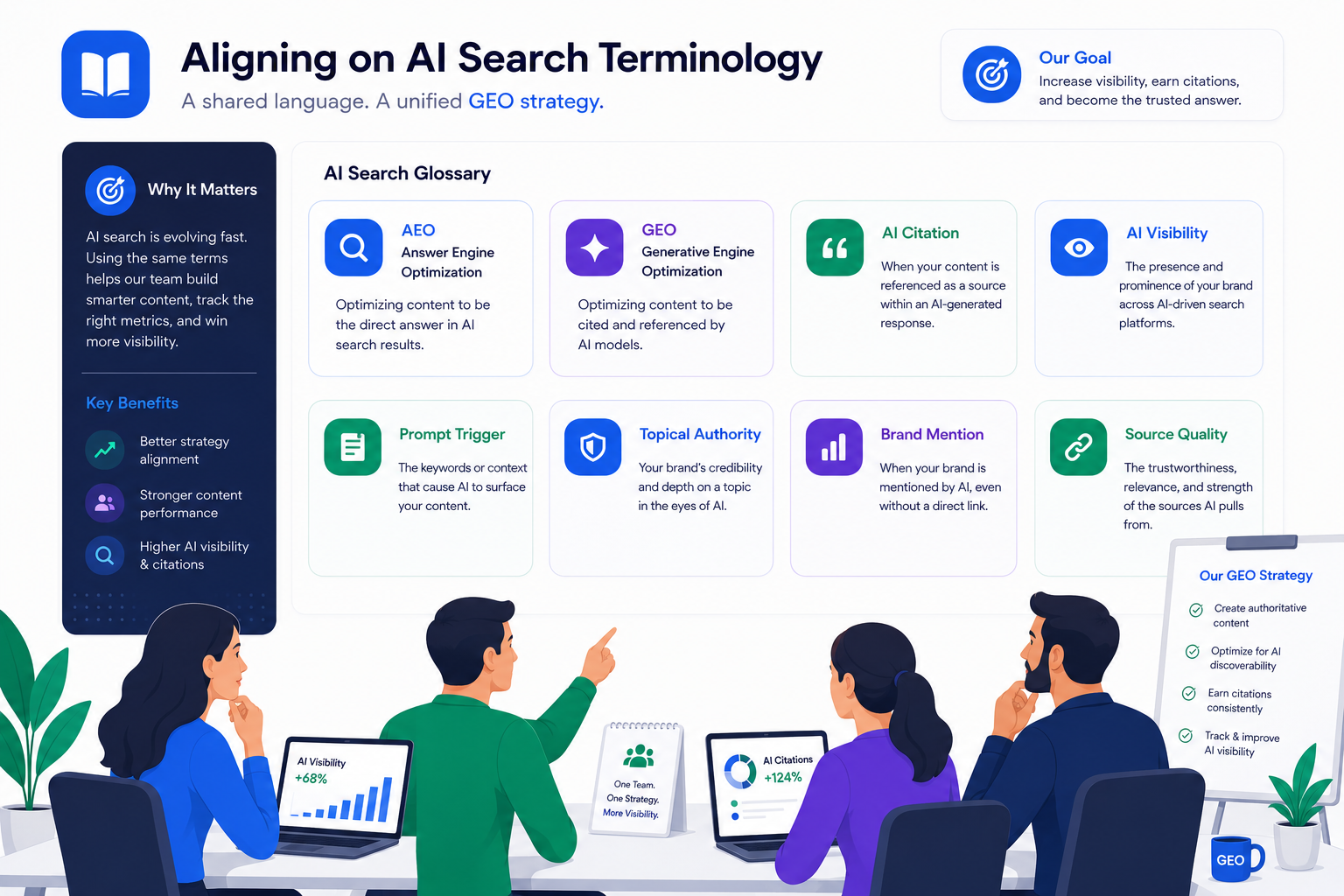
GEO (Generative Engine Optimization) focuses specifically on getting your brand cited as a source in AI-generated answers produced by systems like ChatGPT, Perplexity, Gemini, and Google AI Overviews. The goal is brand citation and source mention in AI-written paragraphs. AEO (Answer Engine Optimization) is broader — it targets winning the selected answer position in any answer-presenting system, including voice search, Google featured snippets, AI Overviews, and conversational AI. GEO is about citation; AEO is about winning the answer slot. Both require similar content techniques — direct answers, question-format headings, FAQ schema — but GEO additionally requires entity authority building and cross-platform corroboration that AEO alone does not emphasize.
What does "entity authority" mean in AI search?
Entity authority refers to the degree to which AI engines recognize and trust a brand, person, or organization as an authoritative source of information in a specific domain or topic area. AI engines build entity models from training data, Knowledge Graphs, and web crawling. A brand with high entity authority has a verified Google Business Profile, consistent presence across LinkedIn, G2, Crunchbase, and industry directories, named authors with verifiable credentials, and multiple third-party mentions from authoritative sources. Entity authority is a foundational GEO signal — without it, even technically perfect content may not be cited because the AI engine cannot verify the source's credibility. Building entity authority typically takes 60–90 days of systematic effort across multiple platforms.
What is a citation signal in AI search?
A citation signal is any factor that AI engines evaluate when deciding whether to cite a piece of content in a generated answer. The five primary citation signals are: content extractability (how easily an AI engine can parse a clean answer from your page), entity authority (how well AI engines recognize and trust your brand), freshness (how recently the content was published or updated — 50% of AI-cited content is under 13 weeks old), cross-platform corroboration (how many independent authoritative sources mention the same information), and structured data implementation (whether FAQPage, Article, HowTo, and Speakable schemas are correctly deployed). Strong citation signals across all five dimensions maximize the probability of consistent AI citation across multiple platforms.
How is AI search visibility different from SEO rankings?
SEO rankings measure position in a list of blue links on a Google search results page — the goal is to rank #1, #2, or #3 to capture most of the clicks. AI search visibility measures how often your brand is cited or mentioned in AI-generated answers — there is no ranked list, only cited sources and uncited sources. The signals differ substantially: SEO heavily weights backlinks and keyword relevance, while AI citation weights content extractability, entity authority, freshness, and structured data. The measurement differs: SEO uses rank tracking tools, while AI visibility requires citation audits across ChatGPT, Perplexity, Gemini, and AI Overviews. The timeline differs: SEO takes 4–12 months to move rankings meaningfully, while first AI citations can appear within 6–10 weeks of targeted optimization.
What is content extractability?
Content extractability is the ease with which an AI engine can identify, parse, and extract a clean, complete, direct answer from a web page. High-extractability content has three characteristics: it leads with the answer in the first paragraph (ideally the first sentence), it uses clear structural markers like question-format H2 headings and bulleted or numbered lists, and it avoids burying key information in dense prose paragraphs without structural breaks. Low-extractability content — long context-setting before the answer, no heading hierarchy, flowing paragraphs with no delineation — is significantly less likely to be cited by AI engines even when the underlying information is accurate and relevant. Improving extractability is often the highest-impact single change available for GEO performance. It requires no technical changes, just content restructuring.
What does zero-click search mean for my business?
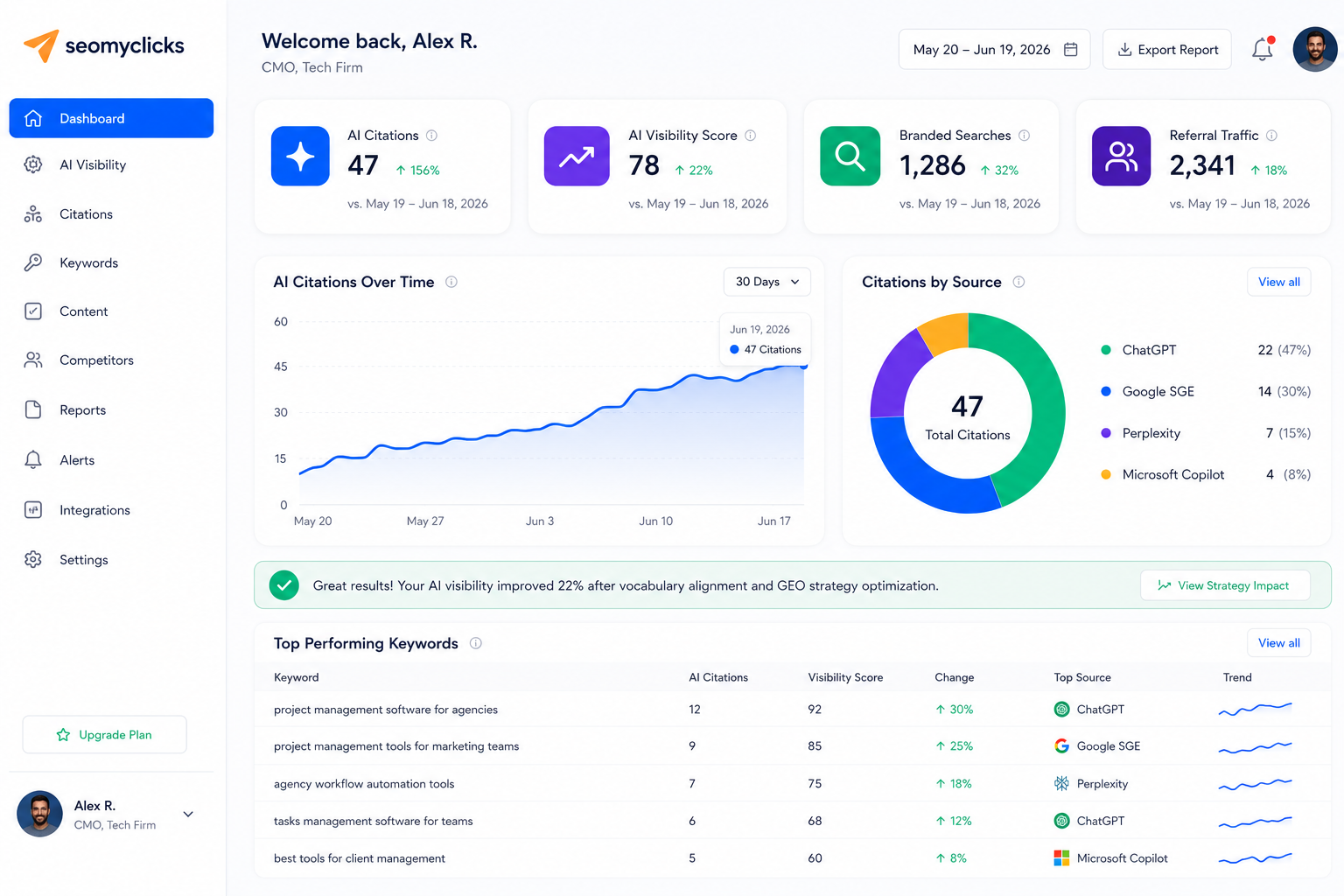
Zero-click search refers to a search session where the user finds the information they need directly on the search results page — through an AI Overview, featured snippet, or Knowledge Panel — without clicking to visit any website. 61% of Google searches now end without a click. For your business, zero-click search means that even if your content is used to generate an AI answer, you may not receive website traffic from that interaction. However, your brand name may still appear in the AI answer, driving brand awareness and branded search from users who then search directly for your brand. This is why GEO measurement tracks citation frequency and branded search growth alongside traffic — because AI search benefits often manifest as brand signals before they produce direct traffic increases.
What is RAG and how does it affect AI citations?
RAG stands for Retrieval-Augmented Generation — the technical process by which AI search engines retrieve relevant content from the web and use it to augment the answers they generate. When a user asks ChatGPT Search or Perplexity a question, the system first retrieves relevant web pages (the retrieval step using traditional search indexing), then reads and synthesizes those pages into a generated answer that cites the sources (the augmented generation step). Understanding RAG explains why certain content gets cited: the AI retrieves content that matches the query semantically, then selects the most extractable and trustworthy passages to include in its answer. Optimizing for RAG requires passing both steps — strong SEO signals to ensure retrieval, and high extractability to win the citation selection stage.
How is "freshness" defined in AI search?
In AI search, content freshness refers to how recently a page was published or significantly updated. The key freshness benchmark is 13 weeks — approximately 50% of AI-cited content is less than 13 weeks old, suggesting AI citation systems weight recently updated content more heavily than older content on the same topic. Freshness is signalled to AI engines through the dateModified field in Article schema (which AI crawlers specifically check), visible "Last Updated" dates on the page, and recency of the published date in page metadata. The 13-week freshness rule means that a content refresh calendar — updating key pages with new data, new examples, and a fresh dateModified every quarter — is a core component of sustained AI citation performance rather than an optional maintenance task.